
2026 Print Trends: Innovations, Sustainability & What's Next in Printing
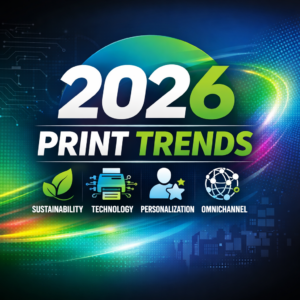
2026 Print Trends Shaping the Future of the Printing Industry
The print industry is entering a defining era. As digital experiences continue to evolve, print is not fading away it is transforming. 2026 Print Trends reflect a powerful shift toward sustainability, smarter technology, deeper personalization, and tighter integration with digital marketing. For businesses that rely on printing and packaging to build brand trust and drive results, understanding these changes is no longer optional.
This guide explores the most important printing trends 2026 will bring, explains how the industry is changing, and shows how print remains a relevant, high-impact tool for marketing, packaging, and communication in the years ahead.
Sustainability Leads the 2026 Print Trends
Sustainability is no longer a niche concern; it is at the center of nearly all 2026 print trends. Customers, regulators, and brands are demanding environmentally responsible printing practices that reduce waste without sacrificing quality.
Key sustainable printing trends to watch
- Increased use of recycled, FSC-certified, and biodegradable papers
- Growth of water-based, soy, and low-VOC inks
- Reduced waste through short-run and on-demand printing
- Energy-efficient presses and carbon-reduction initiatives
For packaging in particular, sustainability is shaping both design and production. Lightweight materials, minimal ink coverage, and recyclable coatings are becoming standard across packaging print trends.
Brands that adopt sustainable printing not only reduce environmental impact but also strengthen customer trust and meet growing ESG expectations.
Digital and On-Demand Printing Continues to Dominate
One of the clearest commercial printing trends for 2026 is the continued rise of digital and on-demand printing. Businesses want speed, flexibility, and cost control and digital printing delivers all three.
Why digital printing is shaping the future of printing
- Faster turnaround times for marketing materials
- Cost-effective short runs with no plate setup
- Easier versioning for regional or campaign-specific content
- High-quality output that rivals traditional offset printing
As digital printing trends advance, print providers can produce everything from brochures and catalogs to folding cartons and labels with greater efficiency.
Real-world benefit: Businesses can test campaigns, reduce inventory, and adapt messaging quickly without large upfront print costs.
Personalization and Variable Data
Personalization is no longer limited to digital ads and emails. In 2026, print is becoming one of the most powerful personalization channels available.
How personalization is transforming print marketing
- Variable data printing allows unique names, images, and offers on each piece
- Personalized direct mail delivers higher response rates than generic mailers
- Print integrates with CRM and marketing automation platforms
These print marketing trends enable brands to create tactile, memorable experiences that stand out in a crowded digital landscape.
Real-world benefit: Personalized print increases engagement, improves conversion rates, and reinforces brand loyalty especially when combined with digital touchpoints.
Smart Print, Automation, and AI Integration
Technology is reshaping how print is produced behind the scenes. One of the most impactful 2026 print trends is the adoption of automation and artificial intelligence across print workflows.
How AI is impacting the printing industry
- Automated prepress and file preparation reduce errors
- Predictive maintenance minimizes equipment downtime
- AI-powered design tools assist with layout and optimization
- Smarter scheduling improves turnaround and resource use
While AI may sound complex, its role in print is practical and efficiency-driven. These advancements help print providers deliver consistent quality at scale while keeping costs competitive.
Real-world benefit: Faster production, fewer mistakes, and more reliable delivery timelines for businesses that depend on print.
Omnichannel Integration Keeps Print Relevant in 2026
One of the biggest misconceptions about print is that it competes with digital marketing. In reality, the future of printing is deeply connected to omnichannel strategies.
How print fits into modern marketing
- QR codes link print to landing pages, videos, and promotions
- NFC and augmented reality enhance packaging and signage
- Print reinforces digital campaigns through physical touchpoints
This integration answers a common question: Is print still relevant in 2026? The answer is yes especially when print works alongside digital to create cohesive brand experiences.
Real-world benefit: Print becomes measurable, interactive, and strategically aligned with digital marketing goals.
Summary: Preparing for 2026 Print Trends
The most successful businesses in 2026 will be those that embrace change rather than resist it. From sustainability and digital production to personalization and AI, 2026 Print Trends show an industry that is evolving to meet modern expectations.
Print is no longer just about ink on paper it is about experience, efficiency, and impact. Companies that adapt now will be better positioned to compete, connect, and grow.
To learn more about trends in Print Finishing Solutions in 2026, read our blog.
FAQ – 2026 Print Trends
What are the biggest print trends in 2026?
The biggest trends include sustainable printing, digital and on-demand production, personalization through variable data, AI-driven automation, and omnichannel integration.
How is printing changing in 2026?
Printing is becoming faster, more flexible, and more data-driven. Automation and AI are improving workflows, while sustainability is influencing materials and processes.
Is print still relevant in 2026?
Yes. Print remains highly effective, especially when combined with digital marketing. Physical materials build trust, increase recall, and enhance brand presence.
What role does sustainability play in printing trends?
Sustainability is central to nearly all printing decisions in 2026. Eco-friendly materials, waste reduction, and responsible sourcing are now expected, not optional.
How is AI impacting the printing industry?
AI improves efficiency through automation, predictive maintenance, smarter design tools, and optimized production workflows, helping print providers deliver better results faster.